
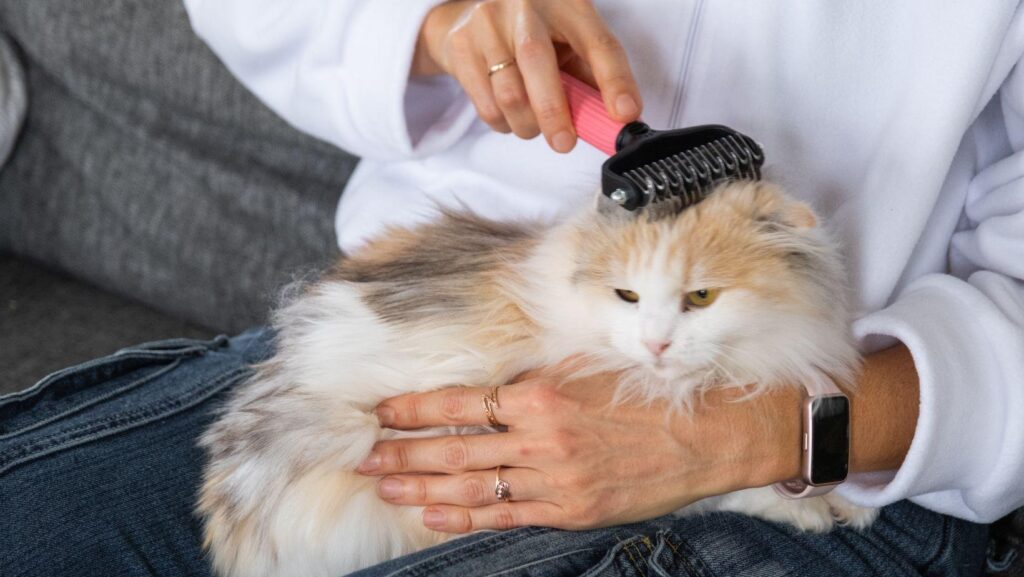
According to The International Cat Association’s Official Cat Grooming Guide, December 2024, long-haired cats require brushing daily or every other day to prevent matting and tangling, with particular attention to areas behind the ears, under the armpits, and around the tail where mats form first and fastest.
That recommendation is the starting point most prospective long-haired cat owners underestimate. The coat is the reason many people choose these breeds, and it is also the commitment most people underestimate before bringing one home. Understanding what grooming long-haired cats actually involves, per breed and per coat type, is the clearest way to know whether a long-haired breed fits your life before you commit.
Do long-haired cats need to be groomed? Yes, without exception and without shortcuts. The difference between breeds is not whether daily grooming is required but how much time each session takes and which specific coat challenges each breed presents.
What Makes Long-Haired Cat Coats Different From Each Other?
Not all long coats are equal in their maintenance demands.
- A Ragdoll cat carries a semi-long, silky coat with a relatively light undercoat – beautiful, flowing, and moderately demanding.
- A Persian cat carries one of the most labor-intensive coats in the domestic cat world: a dense, cottony double coat that mats close to the skin if left even 48 hours without attention.
- A Siberian cat sits between the two – a full triple-layered coat that is weather-resistant and seasonally variable, demanding more during the spring shed and less during summer months when the coat naturally reduces.
Understanding where your breed falls on this spectrum is the first practical step in grooming long-haired cats correctly.
Long-Haired Cat Grooming Demands by Breed Type
|
Breed |
Coat Type |
Daily Brushing |
Professional Grooming |
Key Challenge |
|
Persian |
Dense double, cottony |
Yes, 15-20 min |
Every 6-8 weeks |
Mats form close to skin; face fold cleaning required |
|
Ragdoll |
Semi-long, silky |
Yes, 10-15 min |
Every 8-12 weeks |
Hindquarter and belly tangles |
|
Siberian |
Triple-layered, weather-resistant |
Daily in spring; every other day otherwise |
Every 8-12 weeks |
Seasonal undercoat blow-out |
|
Maine Coon |
Semi-long, dense |
2-3 times weekly minimum |
Every 8-12 weeks |
Under-arm and belly matting |
|
Norwegian Forest Cat |
Double coat, water-resistant |
Daily in spring; 2-3 times weekly otherwise |
Every 8-12 weeks |
Dense undercoat tangles from the inside out |
|
Birman |
Semi-long, silky |
Every other day |
Every 10-12 weeks |
Collar and chest area tangling |
How to Groom a Long Haired Cat: The Correct Sequence
Most grooming problems with long-haired cats come not from brushing too infrequently but from brushing incorrectly – surface-level strokes that miss the undercoat where mats originate. TICA’s guidance specifies using a wide-toothed comb first to detangle from the skin outward, followed by a slicker brush to remove loose fur from the surface.
The correct sequence for how to groom a long-haired cat:
What Happens When Grooming Is Skipped?
Mats are the primary consequence of inconsistent grooming, and they are not simply cosmetic. A fully formed mat pulls constantly on the skin beneath it, causing pain, restricting movement, and creating warm, moist conditions where bacterial infections and skin lesions develop. In severe cases, pelting, where the entire coat forms a single solid sheet close to the body, requires veterinary sedation and full shave-down to resolve safely.
The progression from missed brushing to mat is faster than most owners expect:
- 24-48 hours: Early tangles form in high-friction areas
- 3-5 days: Tangles consolidate into small mats that resist combing
- 1-2 weeks: Mats tighten and begin pulling skin; removal becomes painful without specialist tools
- 3-4 weeks: Pelting becomes possible in Persian and dense-coat breeds
Prevention requires only 10 to 20 minutes daily. Correction requires a professional groomer, sedation in severe cases, and weeks of recovery for the cat’s skin and coat condition.
What Does a Realistic Long-Haired Cat Grooming Routine Look Like?
The Weekly Commitment Owners Should Plan For
The honest time commitment for grooming long-haired cats is 15 to 20 minutes of active brushing daily, plus 5 minutes of ear and eye checks every few days, nail trims every 3 to 4 weeks, and professional grooming every 6 to 12 weeks depending on the breed.
That totals roughly two hours per week for the most demanding coats – the Persian and the full-coated Norwegian Forest Cat – and slightly less for semi-long breeds like the Ragdoll and Birman. Bathing every 6 to 8 weeks with a cat-appropriate shampoo followed by thorough drying reduces the buildup that accelerates matting between sessions.
For owners who find this sustainable, grooming becomes a genuine bonding activity. Long-haired cats conditioned to grooming from kittenhood tolerate and often enjoy it. For owners who find it unrealistic, a shorter-coated breed is the more honest choice.
Frequently Asked Questions
Do long-haired cats need to be groomed every day?
Yes, daily brushing is the standard recommendation for most long-haired breeds, as confirmed by TICA’s official grooming guidance. The only exceptions are semi-long breeds like the Ragdoll or Birman during low-shedding periods, where every-other-day brushing may suffice. Persian cats and full-coated breeds like the Norwegian Forest Cat require daily attention year-round without exception.
How do I groom a long-haired cat that resists brushing?
Introduce grooming during kittenhood if possible, starting with one to two minutes of gentle combing and building duration gradually with treats as positive reinforcement. For adult cats that resist, use a wide-toothed comb rather than a slicker brush initially – it is less stimulating on the skin. Short, consistent daily sessions produce better long-term tolerance than infrequent long sessions the cat associates with discomfort.
What happens if I don’t groom my long-haired cat regularly?
Mats form within 24 to 48 hours in high-friction areas and progress to painful, tight clumps within a week of missed brushing. In dense-coat breeds like Persians and Norwegian Forest Cats, pelting, where the coat forms a solid sheet, can develop within three to four weeks of neglect and requires veterinary sedation to resolve safely. Skin infections and restricted movement are secondary consequences of severe matting.
How often should a long-haired cat go to a professional groomer?
Every 6 to 8 weeks for Persian cats and other dense-coat breeds; every 8 to 12 weeks for semi-long breeds like Ragdolls, Siberians, and Birmans; and every 10 to 12 weeks during low-shedding seasons for triple-coat breeds like the Norwegian Forest Cat and Maine Coon. Professional grooming removes buildup that home brushing cannot address and provides a sanity check on coat and skin condition between owner-managed sessions.
Is grooming a long-haired cat expensive over time?
Professional grooming sessions for long-haired cats typically cost $50 to $120 per session depending on breed, coat condition, and location. At 6 to 8-week intervals, annual professional grooming costs run $325 to $1,040. Add quality grooming tools – a wide-toothed steel comb and slicker brush – at a one-time cost of $30 to $60, and the ongoing annual grooming commitment for a long-haired breed is a real budget line that prospective owners should factor in before purchase.