
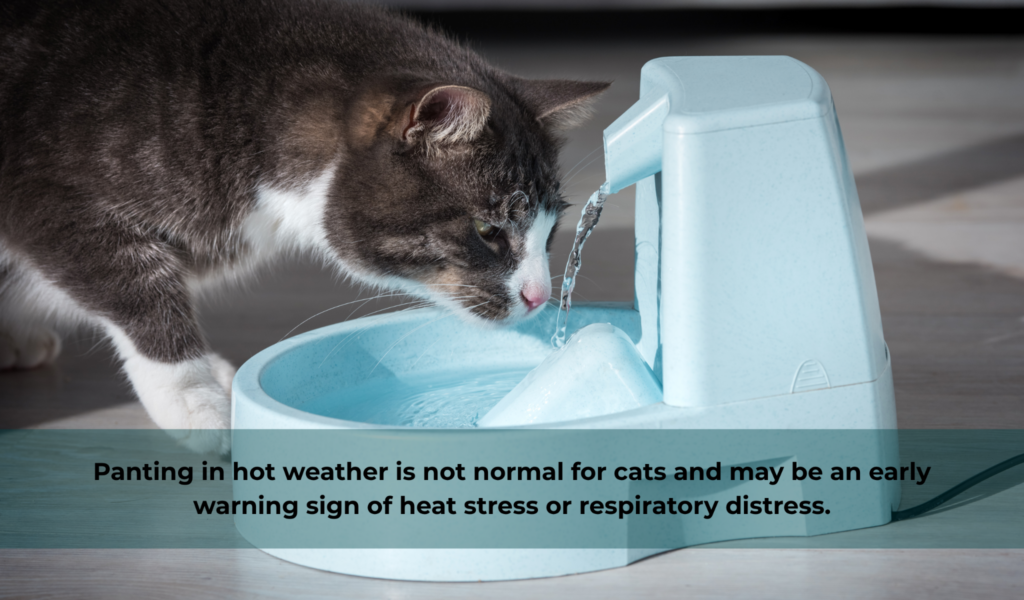
Cats are often quiet about discomfort.
They may hide pain, retreat when stressed, or show only subtle changes when something is wrong. That is one reason cat panting can feel so alarming for pet parents, especially during hot weather.
Unlike dogs, cats do not normally pant as part of everyday cooling.
When a cat starts breathing with an open mouth, especially in summer, it deserves attention.
A few seconds of panting after intense play, a stressful car ride, or a frightening moment may settle once the cat is calm and cool.
But panting that continues, appears suddenly, happens at rest, or comes with other symptoms can be a sign of heat stress, respiratory distress, heart disease, pain, toxin exposure, or other pet emergency.
As summers become hotter and heatwaves more common across many parts of the United States, cat parents need to know the difference between “watch closely” and “go to the vet now.”
This is especially important for indoor cats in homes without reliable cooling, senior cats, kittens, overweight cats, flat-faced breeds, and cats with heart or breathing conditions including large or long-haired breeds care often includes extra attention to hydration, weight, airflow, and cool resting areas during summer.
Why cats pant in hot weather
For cats that become anxious during travel, learning how to keep a cat calm in a car can also help pet parents reduce stress-related panting before it turns into a more serious concern.
Cats regulate heat differently than humans. They do not sweat across their bodies the way people do. Instead, they rely on behaviors such as resting in cool areas, reducing activity, grooming, stretching out, and seeking shade.
Some moisture can evaporate from their paw pads, but it is not enough to protect them during extreme heat.
Panting can happen when a cat is trying to release excess heat or recover from stress. However, because cats do not commonly pant the way dogs do, open-mouth breathing should never be brushed off as “normal summer behavior.”
Sploot animal urgent care Denver clinic vet experts emphasize that cat panting in hot weather should never be ignored, especially when it continues, happens at rest, or appears alongside drooling, weakness, vomiting, collapse, or labored breathing.
That urgency also connects with how Sploot’s medical team talks about feline care more broadly.
“Cats may hide their feelings and not tell us a lot at home, but many times they are telling us more than we could ever think when they are less social, are hiding, or stop eating. If you see changes in your cat’s day-to-day behavior, reach out to our veterinary team and we can help determine if there is anything to be concerned with”, states Dr. Chris Lenahen, DVM Medical Director, at Sploot Veterinary Care
For cat parents, that is an important reminder.
Panting may look like one obvious symptom, but it should also be read alongside quieter changes, such as hiding, reduced appetite, lower energy, or acting less social.
In hot weather, those small shifts can help pet parents recognize when a cat needs urgent veterinary attention instead of waiting to see if the problem passes.
In hot weather, panting may be a sign that your cat is struggling to cool down. This can happen if a cat is trapped in a warm room, garage, car, balcony, conservatory, laundry room, or outdoor space without shade and water. It can also happen indoors during a power outage, in homes without air conditioning, or during unusually humid days when cooling becomes harder.
Some cats are more vulnerable than others. Persian and other flat-faced cats may have more difficulty breathing efficiently.
Older cats may have less physical resilience. Kittens can overheat faster. Overweight cats may struggle to regulate body temperature.
Cats with heart disease, asthma, respiratory infections, anemia, or chronic illness may pant because their body is under stress.
When cat panting is an emergency
Cat panting becomes an emergency when it does not stop quickly, happens at rest, or appears with other warning signs.
A cat that is panting, drooling, weak, disoriented, vomiting, collapsing, or breathing with effort needs urgent veterinary attention.
Watch for these red flags:
If your cat is panting and seems unable to settle, treat it as urgent. Even if the panting improves after cooling, your cat may still need veterinary evaluation. Heat-related illness can affect organs internally, and symptoms may worsen after the initial episode.
Heat Exhaustion vs. Heatstroke in Cats
Heat exhaustion and heatstroke are not the same, but they are connected. Heat exhaustion can happen when a cat becomes overheated and dehydrated but has not yet reached the most dangerous stage. Heatstroke is more severe and can be life-threatening.
A cat with early heat stress may seem restless, seek cool floors, groom excessively, breathe faster, or appear unusually tired.
Panting can appear as the body struggles to cool itself. At this stage, fast action matters.
Heatstroke can develop when the cat’s body temperature rises to a dangerous level and the body can no longer regulate itself. This can lead to inflammation, organ injury, blood clotting problems, brain effects, shock, and even death.
Signs of possible heatstroke include panting, labored breathing, red gums, vomiting, diarrhea, confusion, collapse, seizures, and inability to stand. This is not a situation to manage at home alone and need proper heat safety.
Cats with suspected heatstroke need veterinary care immediately.
What to do if you cat is panting in the heat
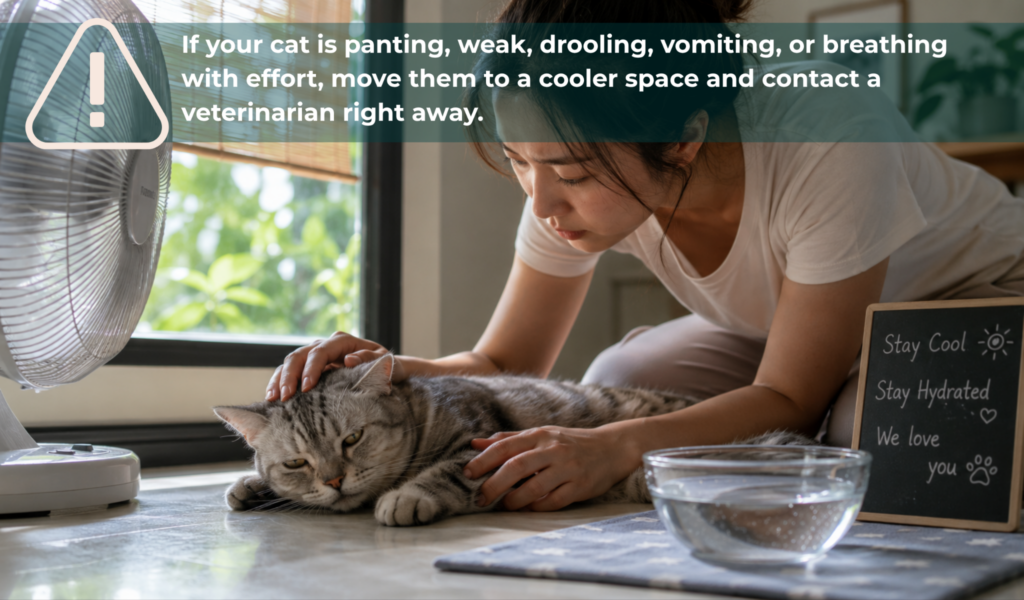
The first step is to move your cat away from the heat. Bring them into an air-conditioned room if possible.
If you do not have air conditioning, move them to the coolest room available, use a fan, close curtains against direct sun, and place them on a cool tile floor or shaded surface.
Offer small amounts of cool water, but do not force your cat to drink. Forcing water can increase stress or risk aspiration if the cat is breathing abnormally.
You can gently cool your cat with a damp towel, especially around the paws, belly, and body. Use cool or lukewarm water, not ice-cold water. Extreme cold can cause blood vessels to constrict, which may slow heat loss and increase stress.
Do not dunk your cat into cold water. Do not use ice baths. Do not wrap the cat tightly in wet towels for a long period, as trapped moisture can prevent heat from escaping.
Most importantly, call a veterinarian or urgent care clinic as soon as possible. Describe exactly what you are seeing: how long the panting has lasted, whether the mouth is open, whether gums look normal, whether your cat can walk, and whether there has been vomiting, collapse, or seizures.
If your cat is struggling to breathe, collapsing, or showing severe distress, go to an emergency veterinary hospital right away.
Why fast veterinary care matters
Panting can look like one symptom, but veterinarians may need to check for several possible causes. Heat is one concern, but not the only one. Cats may pant because of asthma, heart disease, fluid around the lungs, pain, trauma, anemia, infection, toxin exposure, or severe anxiety.
This is why urgent care is important.
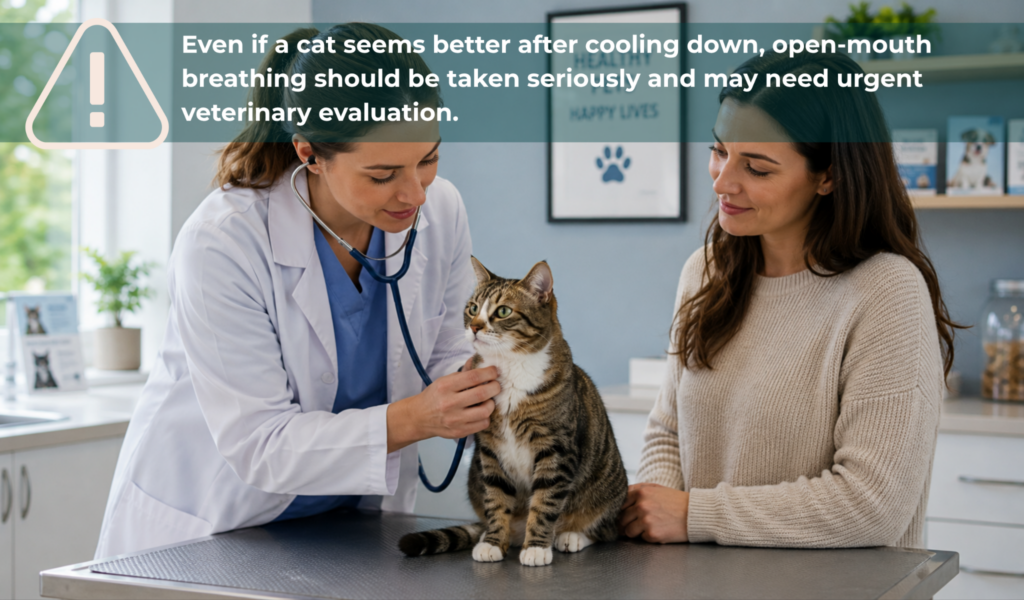
A veterinary team can evaluate your cat’s temperature, breathing effort, heart rate, hydration, gums, and overall stability. Depending on the case, the cat may need oxygen support, fluids, cooling, bloodwork, imaging, medication, or emergency transfer.
The urgent care model is useful here because many cat symptoms require quick triage. The clinics are designed to support both primary and urgent care, with same-day access and services for sick visits.
For cat parents, that means there is a place to turn when a symptom feels urgent but they are unsure whether it is a full emergency.
This matters because cats can decline very quickly.
A cat that is panting from heat stress may seem only mildly uncomfortable at first, then become weak or disoriented.
A cat with breathing distress may hide, making the situation look less dramatic than it is. The safest rule is simple: if your cat is open-mouth breathing and it does not stop quickly, call a vet.
How to Prevent Cat Panting During Hot Weather
Prevention is the best way to protect cats during summer. Even indoor cats can overheat if the home becomes too warm. Make sure your cat always has access to fresh water, shade, and a cool resting area.
Keep cats indoors during extreme heat. If your cat has supervised outdoor time, avoid the hottest part of the day and bring them inside before temperatures rise. Never leave a cat in a parked car, even briefly. Cars heat up quickly and can become deadly in minutes.
At home, close blinds during peak sun, use fans safely, keep water bowls in multiple rooms, and consider pet-safe cooling mats.
Some cats enjoy licking ice cubes or drinking from a fountain, but every cat is different. The goal is to make hydration easy and reduce heat exposure.
Be careful with enclosed spaces. Cats may sneak into garages, sheds, laundry rooms, greenhouses, closets, or balconies. These spaces can become dangerously hot, especially if the cat gets trapped.
If your cat is flat-faced, senior, overweight, very young, or has a known medical condition, be extra cautious. These cats may need cooler indoor conditions and closer monitoring during heatwaves.
When to Call the Vet Even If Your Cat Seems Better
Even if your cat panting cools down, and appears normal again, the risk may not be over. Call your veterinarian if:
Repeated panting can sometimes point to an underlying health issue, including heart or respiratory disease.
Since cats often hide discomfort, open-mouth breathing should always be taken seriously, even if your cat seems better afterward.
Final Takeaway
Cat panting in hot weather is not something to ignore. While a brief episode after stress or intense play may pass quickly, persistent or unexplained panting can be a sign of heatstroke, breathing distress, heart disease, or another urgent condition.
Move your cat to a cool place, offer small amounts of water, begin gentle cooling, and contact a veterinarian for guidance. If your cat is weak, disoriented, vomiting, collapsing, or struggling to breathe, seek emergency care immediately.
Summer can be safe and comfortable for cats when pet parents know the signs early. The faster you respond to panting, the better chance your cat has of avoiding a serious emergency.